
What Paramedical Tattoo Certification Should Include
A client who has lived through mastectomy, surgery, injury, or major weight change is not booking a cosmetic service on impulse. They are trusting an artist with a visible part of their healing story. That is why paramedical tattoo certification should mean more than receiving a completion certificate after watching a few videos. It should represent focused technical education, responsible sanitation practices, realistic client communication, and the confidence to know when a case belongs in your chair and when it does not.
For permanent makeup artists, estheticians, tattoo professionals, and beauty entrepreneurs, paramedical work can become one of the most meaningful and specialized additions to a service menu. It also requires a higher standard of preparation. The right education helps you build a restorative practice with skill, care, and a clear plan for operating professionally.
Why This Specialty Requires More Than Basic PMU Training
Paramedical tattooing uses pigment to improve the appearance of scars, stretch marks, surgical areas, and skin irregularities. Services may include scar camouflage, stretch mark camouflage, areola restoration, and color correction for healed tissue. While the work uses tattooing principles, it is not simply permanent makeup applied to a different area of the body.
Healed scar tissue may be thicker, thinner, less elastic, more sensitive, or unpredictable in how it receives pigment. Stretch marks often contain multiple tones and textures within a single treatment area. A successful result depends on careful assessment, customized pigment mixing, controlled implantation depth, and patience through the healing process.
This is also a service where consultation is part of the treatment. Clients may arrive with understandable expectations shaped by filtered before-and-after photos. A trained technician knows how to explain that camouflage blends the area into surrounding skin rather than erasing texture or changing anatomy. That honest conversation protects the client, protects your reputation, and supports better results.
What a Strong Paramedical Tattoo Certification Covers
A credible paramedical tattoo certification program should teach you how to think through a case, not just replicate a technique. Look for education that combines theory, supervised application, and practical protocols you can use once you begin serving paying clients.
Skin, Scar Tissue, and Client Eligibility
Before choosing a needle configuration or pigment formula, you need to understand what you are working on. Quality training covers skin structure, skin tone assessment, Fitzpatrick considerations, scar maturity, contraindications, and variables that can affect retention.
A scar must be fully healed and medically cleared when appropriate before it can be considered for camouflage. Timing varies by the client and procedure, which is why a technician should never make broad promises about treatment dates without reviewing the individual case. Certain medications, active skin conditions, keloid history, compromised healing, or recent procedures may make treatment unsuitable or require physician clearance.
This knowledge positions you as a responsible specialist rather than a technician who treats every inquiry as an automatic booking.
Color Theory for Real Skin, Not a Color Chart
Skin camouflage is a custom color service. The target is not simply “beige.” The target is a balanced shade that respects the client’s undertone, overtone, surrounding skin, scar color, and the way pigment is likely to heal.
Students should learn how to evaluate warmth, coolness, saturation, and value across diverse skin tones. They should also practice neutralizing visible discoloration when appropriate before attempting a final camouflage blend. This is especially important because implanted pigment can heal differently than it appears during a procedure.
A course that teaches only a few premixed formulas may get you started, but it will not prepare you for the variation you will see in real clients. Strong color training gives you a process for making informed adjustments rather than guessing.
Machine Control and Technique Selection
Paramedical work demands intentional machine handling. The right depth, speed, hand pressure, needle grouping, and movement pattern depend on the area being treated and the condition of the tissue. Overworking tissue can create unnecessary trauma and compromise healing. Working too lightly may lead to weak retention.
Training should explain why a technique is selected, not just show the finished movement. You should leave understanding how to build coverage gradually, how to avoid over-saturation, and how to recognize when the skin has had enough for one session. In many cases, a series of conservative treatments produces a better result than trying to force full coverage in one appointment.
Sanitation, Documentation, and Aftercare
Your artistry is only one part of professional practice. Bloodborne pathogen protocols, single-use setup, cross-contamination prevention, consent forms, photography procedures, and detailed aftercare are foundational to client safety and business operations.
Paramedical services also benefit from stronger documentation than a standard cosmetic appointment. Maintain clear consultation notes, medical clearance records when applicable, treatment plans, pigment records, before-and-after photos with consent, and follow-up communication. Good records help you track healing patterns, support consistent care, and build a portfolio based on real outcomes.
Hands-On Practice With Live Models
There is a major difference between understanding scar camouflage in theory and working on living skin with texture, movement, and varied pigment behavior. Hands-on practice matters because it teaches pace, setup, communication, and decision-making under real conditions.
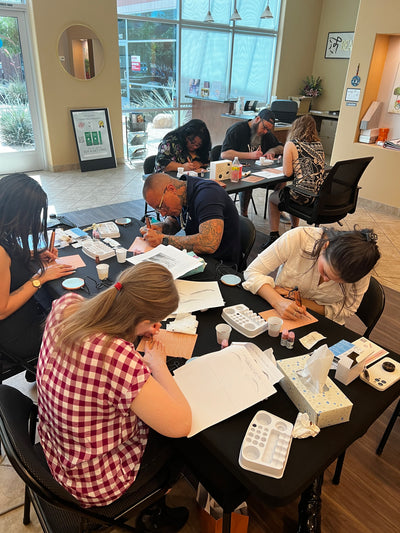
Training with live models, guided by an experienced instructor, gives students an opportunity to apply techniques while receiving immediate feedback. You learn how to assess the treatment area in person, modify your approach, and explain aftercare with authority. That experience is difficult to replace with pre-recorded content alone.
At Arizona Permanent Makeup Training Academy, students can pursue hands-on education designed around professional tools, live-model experience, and the practical paperwork support needed to move toward a working career.
Certification Is Not the Same as Licensure
This distinction matters. A certificate shows that you completed a course. Licensure, registration, permit requirements, or health department rules determine whether and how you may legally provide tattoo services in a particular location.
Requirements vary by state, county, city, and local health authority. Some professionals need body art credentials, bloodborne pathogen training, facility approval, or additional documentation before practicing. If you plan to travel, rent a suite, work inside a salon, or offer services across state lines, verify the rules for every jurisdiction where you intend to work.
The best school can help you understand the process and organize your next steps, but no course should imply that a certificate automatically overrides local regulations. Ask direct questions before enrollment: What credential will I receive? Is the school state-approved? What local paperwork may apply to my business? Does the program include bloodborne pathogen education and practical sanitation standards? Can I get guidance after class if I need help preparing to work professionally?
Clear answers are a sign of a school that takes your future seriously.
How to Choose Training That Supports Your Business Goals
Your decision should be based on more than course length or a promotional price. A lower-cost class may be appropriate for an experienced tattoo artist who needs an introductory specialty workshop. A new artist, however, may need more structured instruction, supervised practice, equipment education, and help understanding compliance.
Review the instructor’s background. Look for demonstrated experience in permanent cosmetics, restorative work, client care, and business operations. Ask whether training includes a machine or starter equipment, whether you will work with live models, and whether the curriculum includes consultations, pricing, photography, aftercare, and portfolio development.
Also consider the kind of business you want to build. Scar camouflage and stretch mark services can complement permanent makeup, aesthetics, body contouring, or fine-line tattoo offerings. Areola restoration may involve deeper consultation skills and referral relationships. Some artists choose to specialize narrowly, while others add paramedical services as a premium branch of a broader beauty practice. Neither path is automatically better. The right choice depends on your training level, local demand, comfort with sensitive client conversations, and willingness to document long-term healing results.
Building Trust Before You Build a Full Schedule
Clients seeking restorative tattoo services are often researching carefully. They want evidence that an artist understands both the emotional and technical side of the work. Your early business focus should be on safe systems, transparent consultations, healed-result photography, and realistic education.
Do not rush to advertise dramatic transformation claims. Explain that results vary, multiple sessions may be recommended, and skin texture remains skin texture. Share your process clearly: consultation, assessment, color planning, treatment, aftercare, and follow-up. This approach may feel less flashy than a quick before-and-after post, but it creates the kind of credibility that earns referrals from clients and complementary professionals.
Your certification can open the door, but your standards determine what happens next. Choose education that challenges your technique, strengthens your judgment, and prepares you to offer restorative work with the care every client deserves.

Leave a comment