
Why Microblading Training With Live Models Matters
A latex practice pad can teach hand movement, but it cannot blink, change position, ask questions, or heal. That is why microblading training with live models is a defining part of serious permanent makeup education. If your goal is to offer paid brow services with confidence, you need more than a certificate and a few practiced strokes. You need guided experience working on real skin, real facial features, and real client expectations.
For aspiring artists, estheticians adding PMU services, and beauty entrepreneurs building a high-value service menu, live-model training closes the gap between learning a technique and performing it professionally. It is where technique becomes judgment, and judgment becomes the foundation of a sustainable career.
What Live-Model Training Teaches That Practice Skin Cannot
Practice skin has a place in beginner education. It lets students learn tool control, hair-stroke direction, pigment placement, pressure, and pattern development without the pressure of a live appointment. Every new artist should spend meaningful time building those fundamentals before touching a client.
But practice material is predictable. Human skin is not. Skin texture, oil production, sensitivity, pore size, skin thickness, previous brow work, medication history, and lifestyle all affect whether microblading is appropriate and how the result may heal. A live model teaches you to assess the full picture rather than focus only on the stroke pattern.
You also learn that brow design is not a one-size-fits-all template. Mapping a brow on a real face requires balance, observation, and communication. One brow may sit higher. Facial muscles may pull differently. Natural hair may grow in inconsistent directions. A strong artist knows how to create symmetry that looks natural, rather than forcing identical brows onto features that are naturally asymmetrical.
That experience matters when clients are trusting you with a highly visible service. The goal is not simply to create crisp strokes during an appointment. The goal is to make informed decisions that support realistic, attractive healed results.
Microblading Training With Live Models Builds Client Confidence
The first time an artist works on a live model, the biggest lesson is often not the blade. It is the consultation. Clients want to know what the service feels like, how long it takes, what healing looks like, whether their current brow shape will be respected, and what they need to do before and after their appointment.
Live-model education gives students the chance to practice these conversations with instructor oversight. You learn how to explain the procedure clearly, obtain informed consent, set expectations around color retention, and discuss why some skin types may be better candidates for nano brows, ombre brows, or another technique instead of traditional microblading.
This is where professional confidence becomes visible. A client is more likely to relax when their artist can confidently explain the design, the process, the aftercare, and the realistic limitations of the service. Confidence does not mean overselling a result. It means knowing how to assess candidacy, communicate honestly, and recommend the service that best fits the client.
Live training also develops appointment flow. You experience the difference between finishing a brow map on a practice pad and managing timing with a person in the chair. You learn when to pause, check comfort, review symmetry from a seated position, and stay focused while maintaining a calm client experience.
Safety and Sanitation Become Real-World Habits
Permanent makeup is a professional service with real health and sanitation responsibilities. Students should not view infection control as a chapter to memorize for an exam. It must become part of every setup, every service, and every cleanup.
During live-model training, students practice proper station preparation, barrier protection, single-use item handling, cross-contamination prevention, sharps disposal, and post-service cleanup in a real service environment. These habits protect the model, the artist, and the future reputation of the business.
A quality course should also teach students to recognize when not to proceed. Active skin irritation, certain medical conditions, recent cosmetic procedures, contraindications, and unrealistic expectations can all require a postponement, a referral, or a different service recommendation. Turning away an unsuitable appointment is not lost business. It is professional judgment.
Requirements can vary by state, county, and local health authority. Before offering services independently, students should understand the rules where they plan to work, including licensing, bloodborne pathogen training, facility requirements, and documentation. Training that includes support with applicable state paperwork can remove a major source of uncertainty for new artists.
Instructor Supervision Changes the Learning Curve
Working on a live model without experienced supervision is not the same as professional hands-on education. A knowledgeable instructor can identify issues while they are still correctable, such as inconsistent depth, poor stroke direction, an unbalanced outline, too much pressure, or a design that does not support the client’s facial structure.
That immediate feedback is valuable because permanent makeup is built on precision. It is much easier to adjust your hand position, stretching method, pigment selection, or mapping approach in the moment than to discover the problem after the appointment is complete.
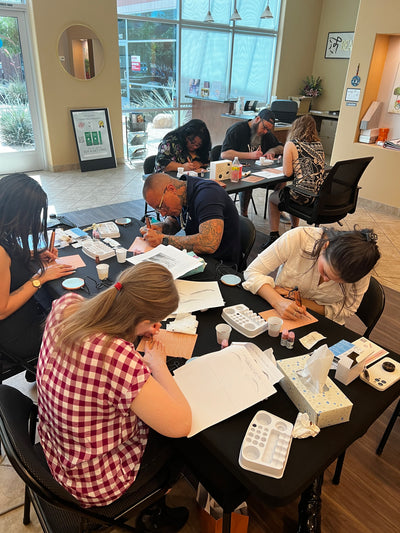
At Arizona Permanent Makeup Training Academy, hands-on education is designed to support the transition from student to working professional. Students benefit from structured instruction, live-model experience, professional tools, and guidance that connects technical training to the realities of building a beauty business.
The best instructors also explain the why behind each correction. Instead of only telling a student to change a stroke, they teach how skin tension, hair growth, facial anatomy, and pigment behavior influence the decision. That creates artists who can think critically when every client presents a different challenge.
What to Ask Before You Enroll
Not every course that advertises hands-on training offers the same depth of live-model experience. Before committing to a program, ask direct questions about how many live models are included, who provides them, and how closely students are supervised during each procedure.
You should also ask whether the curriculum includes consultation, brow mapping, color theory, skin assessment, sanitation, aftercare, photography, touch-up guidance, and business fundamentals. A beautiful before-and-after photo is valuable, but a career-ready artist also needs systems for client communication, pricing, consent forms, scheduling, retention, and reputation building.
Find out what equipment is included as well. Your first kit should support professional practice, not leave you searching for essential supplies immediately after class. Machine-inclusive or tool-inclusive packages can make the next step clearer, especially for students who are entering the industry from a different career.
Finally, look at the credential itself. State-approved education, recognized certification, and board-support guidance can carry more weight than a quick weekend experience with no clear pathway forward. The right program should help you understand what comes after graduation, not simply hand you a certificate and send you home.
Live Models Are a Beginning, Not a Shortcut
Live-model training is powerful, but it does not mean you will stop learning after class. Every artist continues refining their eye, speed, retention knowledge, client communication, and portfolio through practice and continued education. Microblading itself is not ideal for every skin type or every brow goal, which is why learning complementary services such as nano brows or powder brows can strengthen your long-term career options.
Still, your first guided live-model procedures can shape the kind of professional you become. They teach you to slow down, respect the process, make thoughtful recommendations, and treat every face as individual. Those are the skills clients remember when they refer friends, return for touch-ups, and trust you with their appearance.
Choose training that puts real-world standards behind your ambition. When you have practiced under supervision, learned to communicate with care, and completed procedures on live models with purpose, you are better prepared to step into the PMU industry ready to build confidence, serve clients well, and create a business that can grow with you.

Leave a comment