Nano Brows Machine Training Course for Career Growth
A nano brows machine training course is not simply a class on drawing realistic brow strokes. It is professional preparation for artists who want to perform a high-demand cosmetic tattoo service with control, safety, and a clear business purpose. Clients are asking for soft, hair-like brows that suit their skin, lifestyle, and existing hair pattern. Meeting that expectation takes more than owning a PMU machine.
For an aspiring artist, quality training can shorten the distance between interest and income. For an esthetician, microblading artist, or salon owner, it can add a premium service that fits naturally alongside lip blush, eyeliner, and other permanent makeup treatments. The right course should teach you how to create beautiful work, but it should also prepare you to work responsibly with real clients and build a service menu you can stand behind.
What Nano Brows Require From a Professional
Nano brows are created with a cosmetic tattoo machine and a fine needle configuration to implant pigment in hair-like strokes. The goal is a dimensional brow that can look soft and natural rather than flat or heavily filled. Because the technique uses a machine instead of a manual microblading tool, artists have greater flexibility in how they work with certain skin types, including clients whose skin may not retain manual strokes predictably.
That flexibility is not a promise that nano brows work the same way for every client. Oily skin, mature skin, sensitive skin, previous brow tattooing, medication use, and aftercare habits all affect healing and retention. A professional artist needs to assess the client in front of them, set realistic expectations, and know when a powder or combination brow may be the more appropriate recommendation.
Technique matters at every stage. Stroke direction must support the natural growth pattern. Pressure, hand speed, machine speed, stretch, needle depth, and pigment choice all influence whether healed results look refined or blurry. A course should give students time to understand these variables rather than treating a single brow pattern as the answer for every face.
What a Nano Brows Machine Training Course Should Include
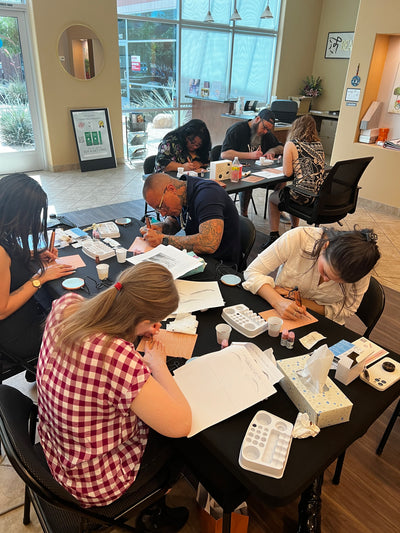
A career-focused program combines theory with repeated, supervised application. Watching an instructor perform strokes is useful. Practicing them until your hand movement becomes intentional is where professional confidence begins.
Machine knowledge and controlled technique
Students should learn how to select and operate their machine safely, including needle cartridges, voltage considerations, grip, hand positioning, and proper setup. The objective is not to memorize one setting. It is to understand how your machine, your movement, and the client’s skin work together.
Synthetic skin practice has a place in training because it allows students to develop consistent stroke rhythm before working on a person. Still, it cannot replace the experience of skin texture, client positioning, mapping adjustments, and the pressure of performing a complete service. Hands-on learning with live models, supervised by an experienced instructor, is a major differentiator for students who want to leave training prepared for the treatment room.
Brow mapping, color theory, and client design
Nano brows begin well before the first pass. Proper consultation and mapping help an artist create brows that complement facial structure rather than follow a one-size-fits-all stencil. Students need to practice symmetry, arch placement, brow-start positioning, and stroke flow while recognizing that perfect mathematical symmetry is not always possible or desirable on a natural face.
Color theory is equally practical. Pigment selection must account for skin tone, undertone, natural brow hair, and the client’s desired result. An artist who understands healed color can make stronger decisions than one who simply chooses a shade that looks good in the bottle.
Sanitation, contraindications, and aftercare
Permanent makeup is a professional service with real health and safety responsibilities. A strong program covers bloodborne pathogen awareness, cross-contamination prevention, workstation setup, disposable supplies, consent forms, and documentation. These systems protect clients, protect your reputation, and help your future business operate professionally.
Students should also understand contraindications and when to postpone or decline a procedure. A client’s medical history, active skin condition, pregnancy status, recent treatments, or use of certain medications may require additional caution. Training should never encourage artists to work outside their scope or make medical claims.
Aftercare deserves the same attention as the procedure. Clients need clear instructions about cleansing, moisture, sun exposure, exercise, picking, makeup, and the normal healing process. Good communication reduces avoidable anxiety and helps clients understand why their brows may initially appear darker before settling into their healed result.
Why Hands-On Training Changes Your Career Start
Online education can be helpful for theory, visual demonstrations, and ongoing review. It is often a convenient option for artists who already have foundational experience. But beginner nano brow artists benefit enormously from in-person feedback, especially when learning machine control and skin response.
An instructor can see problems that are difficult to recognize on your own: strokes that are too deep, inconsistent pressure, poor stretch, uneven pigment saturation, or a mapping choice that does not balance the client’s face. Correcting those habits early can save months of frustration and reduce costly mistakes once you begin accepting paying clients.
At Arizona Permanent Makeup Training Academy, students benefit from state-approved education, hands-on instruction, live-model experience, professional tools, and support with the paperwork that can make the path into PMU feel unclear. For many students, a machine-inclusive training package also removes the uncertainty of wondering what equipment they need to purchase before they can start practicing.
Choose Training That Supports Your Business Goals
A certificate is valuable, but your long-term opportunity depends on what you can do with the skill after class ends. Before enrolling, ask whether the course addresses real business decisions: pricing, consultation flow, portfolio development, client retention, consent forms, photography, and how to position nano brows within a broader beauty business.
Nano brows can be a strong standalone specialty, particularly in a market where clients want natural-looking enhancement. They can also serve as the foundation for a larger PMU menu. An artist who offers nano brows, ombre brows, corrections, lip blush, and eyeliner can better match services to individual client needs instead of pushing every client toward one technique.
There are trade-offs to consider. A lower-cost course may provide an introduction, but it may not include live-model experience, a machine, meaningful practice time, or post-course support. A more comprehensive program is a bigger investment upfront, yet it can offer clearer structure and reduce the expense of piecing together supplies and supplemental education later. Payment-plan access can make formal training more manageable, but students should still view their education as a business investment, not a shortcut to instant results.
Questions to Ask Before You Enroll
Look beyond promotional photos and ask direct questions about how the program is delivered. You want clarity on the instructor’s experience, the amount of hands-on practice, whether live models are included, what equipment comes with the course, and what certification you receive.
It is also smart to ask how the school supports compliance in your state. Requirements for permanent makeup and cosmetic tattooing vary by location, and local health department or board requirements may apply. A nationwide recognized credential can strengthen your professional profile, but it does not eliminate your responsibility to meet the rules where you intend to work.
Finally, consider the learning environment. The best training programs challenge students while providing the feedback needed to improve. You should leave with a stronger understanding of your work, your limitations, and the next steps required to practice professionally.
Build Skill Before You Build Your Client List
The artists who earn lasting client trust are not the ones who rush through training to post a certificate online. They are the professionals who keep practicing, document healed results, refine their consultation process, and recommend the right brow technique for each person.
A nano brows machine training course can give you the structure to begin that work with purpose. Choose one that treats your future career with the seriousness it deserves, then give your hands, your eye, and your business the time to grow.

Leave a comment