

Scar Camouflage Tattoo Training Course for Career Growth
A client may come to you after surgery, an injury, or years of feeling self-conscious about stretch marks. They are not asking for a trendy beauty treatment. They are trusting you with skin that has healed, changed, and often carried an emotional story. A scar camouflage tattoo training course prepares you to approach that responsibility with clinical-minded care, artistic precision, and a service that can set your business apart.
Scar camouflage is a high-value paramedical specialty, but it is not a shortcut service. Successful results depend on accurate color theory, skin assessment, proper technique, honest expectations, and a firm understanding of when not to treat. For beauty professionals who want to build a meaningful, higher-margin service menu, structured training is where that professional standard begins.
What Scar Camouflage Tattoo Training Teaches
Scar camouflage, sometimes called skin-tone tattooing, uses customized pigment blends to reduce the visible contrast between a healed scar and the surrounding skin. The goal is not to erase a scar or recreate untouched skin. It is to soften contrast so the area is less visually dominant.
That distinction matters. Scar tissue does not behave like healthy, undamaged skin. It may be thinner, thicker, less elastic, more fibrous, or unpredictable in how it retains pigment. A course worth your investment teaches you to work with those variables instead of promising a one-size-fits-all result.
Training should cover the science behind healed scar tissue, pigment selection and modification, needle and machine control, implantation depth, stretch-mark camouflage, and realistic result planning. You also need strong instruction in skin tone matching. A color that appears correct in a pigment cup can heal too warm, too cool, too light, or too dark if the artist does not understand undertones and skin response.
Just as important, you should learn consultation skills. Clients need clear education about the process, the possibility of multiple sessions, proper aftercare, and the fact that results vary by skin type, scar age, location, texture, and lifestyle. That conversation protects the client and builds the trust that grows a referral-based business.
Who Is a Strong Candidate for This Specialty?
Scar camouflage can be a smart next step for permanent makeup artists, licensed estheticians where permitted, tattoo artists, and salon owners who want to add restorative services. It also creates a focused path for aspiring technicians drawn to work that blends artistry with client transformation.
The best students are patient, detail-oriented, and willing to respect the limits of the treatment. This is not simply about placing beige pigment into a scar. It requires visual judgment, steady hands, sanitation discipline, and the confidence to decline a service when the tissue is not ready.
You may be a good fit if you want to expand beyond brows, lips, and eyeliner into a niche that serves post-surgical clients, individuals with stretch marks, and clients seeking appearance-focused support after healed skin changes. It can also complement training in areola restoration, scalp micropigmentation, and other paramedical tattoo services.
Safety, Timing, and Client Screening Come First
A quality scar camouflage tattoo training course should never teach artists to treat every scar. Fresh scars, unstable scars, raised keloid scars, active skin conditions, irritated tissue, and areas with medical concerns require caution or referral. Healed skin is not automatically treatable skin.
Students should learn to assess whether a scar is mature enough for treatment. While healing timelines vary and clients should follow their medical provider's guidance, scar camouflage is generally considered only after the area has fully healed and stabilized. Redness, sensitivity, ongoing changes in texture, or recent surgery can signal that it is too soon.
A responsible technician also understands contraindications, consent, sanitation, patch testing practices when appropriate, and aftercare protocols. Training should make a clear distinction between cosmetic tattooing and medical diagnosis. You are providing a specialized cosmetic service, not treating a medical condition or guaranteeing a therapeutic outcome.
State and local requirements also matter. Licensing, bloodborne pathogen education, facility rules, and scope-of-practice standards can differ by jurisdiction. Choose an education provider that can help you understand the practical compliance questions that come with launching professionally, especially if you plan to work in more than one state.
Why Hands-On Training Changes Your Results
Online theory can introduce color theory and scar assessment, but hands-on education is where technique becomes dependable. Working under an experienced instructor gives you immediate feedback on machine angle, hand speed, pressure, pigment dilution, and saturation.
Live-model experience is especially valuable because real skin does not perform like practice skin. You learn how to manage a consultation, photograph the area properly, prepare your station, communicate throughout the appointment, and adjust your approach when tissue responds differently than expected. Those are the moments that build professional judgment.
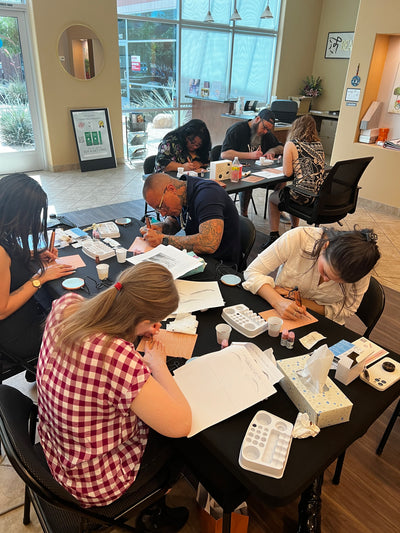
At Arizona Permanent Makeup Training Academy, students can pursue career-focused education designed around practical technique, professional tools, live-model experience, and the business realities behind cosmetic tattoo services. The right environment helps you leave training with more than a certificate. It helps you leave with a process you can repeat safely.
What to Look for Before You Enroll
Course price matters, but it should not be your only filter. A lower-cost class that provides limited technique feedback, no model work, and little support with compliance can become expensive once you are trying to correct uncertainty on your own.
Look closely at the curriculum. Does it explain scar physiology and candidacy, or does it focus only on color matching? Does it teach realistic expectations and proper documentation? Are machines, pigments, needles, and starter supplies included or clearly explained? Does the instructor have direct experience performing the service and operating a beauty business?
Ask how students practice, how many days of instruction are included, and whether the school provides post-training guidance. If you are new to cosmetic tattooing, you may need foundational tattoo education before taking a highly specialized scar camouflage class. If you already perform permanent makeup, an advanced paramedical course may be the stronger fit. The right choice depends on your current skills, local requirements, and business goals.
Turning Training Into a Profitable Service Menu
Scar camouflage can command premium pricing because each case requires customization, time, technical knowledge, and often more than one session. Your pricing should reflect consultation time, supplies, appointment length, follow-up expectations, and your level of experience. Avoid setting prices based only on what other artists charge online.
Before accepting clients, build a professional workflow. Create detailed intake forms, consent documents, photo-release procedures, aftercare instructions, and a policy for touch-ups or additional sessions. Take consistent before-and-after photos with permission. Your portfolio should show healed work whenever possible, because healed results are the real proof of your color and technique decisions.
Marketing should stay respectful. Do not frame scars as flaws that must be fixed. Instead, communicate that clients have an option if they want to reduce visible contrast in a healed area. This language is more ethical, more professional, and more likely to attract clients who value thoughtful care.
Partnering with complementary providers can also help you build the right audience over time. Think carefully about relationships with salons, estheticians, body-contouring professionals, and wellness businesses that serve clients interested in restorative appearance services. Focus on education and trust, not aggressive promises.
Build a Skill Clients Can Feel Good About
Scar camouflage work asks more of an artist than pigment placement. It asks you to listen closely, assess carefully, and stay honest about what the skin can achieve. That is exactly why strong training can become a defining investment in your career.
Choose education that gives you technical structure, real practice, safety standards, and the business confidence to serve clients professionally. When your skill is built on careful training rather than guesswork, you can create results that honor both the client’s skin and the business you are building.

Leave a comment