

Can Estheticians Offer Microneedling in Arizona?
Microneedling can turn a standard facial menu into a higher-value skin service, but the question is not simply whether you know how to perform it. Can estheticians offer microneedling in Arizona? The honest answer is: sometimes, provided the service falls within the professional's permitted scope, the device and treatment protocol are appropriate, and the provider meets all applicable state requirements.
For beauty professionals building a serious career, that distinction matters. A microneedling certificate can strengthen your skills and your credibility, but a certificate by itself does not override state licensing rules, medical-practice laws, local business requirements, or insurance conditions. Before you advertise a treatment, charge a client, or order a device, understand what your license allows you to do.
Can Estheticians Offer Microneedling? It Depends on Scope
Microneedling uses fine needles to create controlled microchannels in the skin. Clients often seek it to improve the appearance of texture, acne scarring, fine lines, enlarged pores, and uneven tone. It is a popular service because it combines visible skin-focused results with a treatment experience that can support package sales and repeat bookings.
But the treatment is more complex than a basic exfoliating facial. Once needles enter the conversation, so do questions about skin injury, bloodborne pathogen controls, contraindications, informed consent, device use, and claims that could cross into the practice of medicine.
Each state sets its own scope-of-practice rules for estheticians. Some states clearly permit microneedling under defined conditions, often with restrictions on needle depth or the type of device used. Other states reserve it for medical professionals or require a physician relationship, delegation, or direct supervision. Rules can also change, and terminology matters. A regulator may distinguish between cosmetic microneedling, dermal needling, medical microneedling, or procedures that penetrate living tissue.
In Arizona, an esthetician should not assume that a training course, a supplier's marketing language, or another artist's social media content confirms legal scope. Review current guidance from the Arizona State Board of Cosmetology and, when relevant, medical regulators. If you are working in a med spa, clarify the supervising provider's policies and the exact role you are authorized to perform.
Training Builds Skill, Not Automatic Authority
A quality microneedling course is still a smart business investment. It gives an esthetician the technical foundation to assess skin conservatively, prepare the treatment area, select appropriate needle configurations, use hygienic technique, manage aftercare, and recognize when a client should be referred out.
The strongest education does not present microneedling as a quick add-on. It teaches why treatment depth, speed, pass pattern, skin condition, and product selection affect outcomes. It also teaches restraint. More aggressive is not automatically better, especially on reactive skin, inflamed acne, compromised barriers, or clients with a history of post-inflammatory hyperpigmentation.
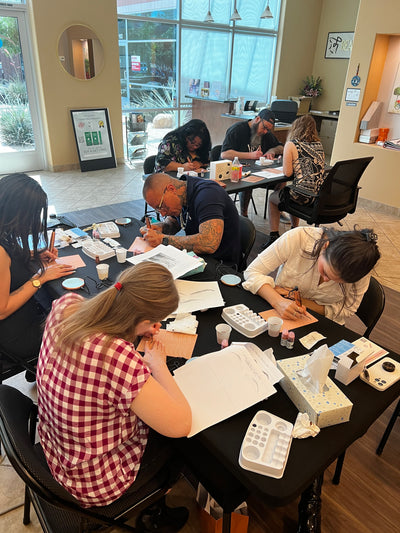
Hands-on instruction matters because technique is difficult to learn from a video alone. Students need feedback on hand pressure, device angle, sectioning, sanitation, and client communication. At AZPMU, advanced beauty education is built around practical skills, professional tools, and the confidence to perform services with a business owner's mindset. Still, every graduate must match that education to the rules that apply to their license and location.
Think of training and licensure as separate but equally valuable parts of your professional foundation. Training tells clients you have pursued specialized knowledge. Your active license and legal scope determine whether, where, and how you may provide that knowledge as a paid service.
What Safe Microneedling Practice Requires
When microneedling is within your allowable scope, safety is the standard that protects both your client and your career. A beautiful before-and-after photo is never worth an infection, pigmentation issue, scarring concern, or complaint to a licensing board.
Start with a thorough consultation. Ask about active breakouts, eczema, psoriasis, rosacea flares, cold sores, keloid history, autoimmune conditions, pregnancy considerations, isotretinoin use, anticoagulants, recent cosmetic procedures, and known allergies. A client who is not a good candidate today may be a good candidate later, after medical clearance or after their skin has recovered.
Use single-use, sterile needle cartridges from a reputable source. Maintain a clean treatment area, wear appropriate personal protective equipment, and follow your bloodborne pathogen training. Dispose of sharps correctly. Your sanitation process should be consistent enough that another trained professional could walk into your room and understand exactly how you prevent cross-contamination.
Documentation is equally professional. Keep signed informed consent, consultation records, treatment settings, lot numbers when appropriate, photos with permission, and detailed aftercare instructions. Good records support continuity of care, help you track client progress, and demonstrate that you operate with intention rather than guesswork.
Be careful with language, too. Estheticians should avoid diagnosing skin conditions, promising a cure, or making medical claims. Focus your marketing on cosmetic goals, client suitability, professional technique, and realistic expectations. Results vary with skin health, home care, treatment consistency, and the concerns being addressed.
Supervision, Insurance, and Your Business Setup
Even if an esthetician's scope permits a form of microneedling, the business setup can add another layer of responsibility. A med spa may require specific supervision protocols. A salon suite may have rules related to waste disposal, facility licensing, or inspection standards. Your professional liability insurer may have separate requirements for coverage, training documentation, approved devices, or treatment depth.
Get answers in writing before you launch. Ask your insurer whether your policy explicitly covers microneedling. Ask whether a certificate from your chosen course satisfies its education requirement. If you work for someone else, ask who supplies the device, who owns the client record, who handles an adverse event, and what escalation procedure applies if a client experiences a concerning reaction.
This is where a beauty entrepreneur separates a hobby service from a durable business. A profitable service menu is not only about charging more per appointment. It is about creating systems that protect your reputation, preserve client trust, and make your operation easier to scale.
Before You Add Microneedling to Your Menu
Before announcing a launch special, complete these practical checks:
- Confirm your current state scope of practice and any supervision requirement.
- Verify that your facility, device, sanitation setup, and sharps disposal process meet applicable standards.
- Complete credible hands-on training and retain your certificate and course records.
- Obtain insurance confirmation that specifically addresses microneedling.
- Build consultation, consent, aftercare, photography, and referral procedures before your first appointment.
Common Mistakes That Put Careers at Risk
The biggest mistake is assuming that certification equals permission. It does not. A course may teach a valuable technique, but legal permission comes from your state scope, credentials, and practice environment.
Another mistake is treating every client with the same settings or protocol. Microneedling should be individualized within your training and scope. Skin type, sensitivity, goals, prior treatments, healing history, and current skin condition all affect the appropriate approach.
Avoid copying before-and-after claims from manufacturers or other providers. If your marketing promises medical outcomes, scar removal, permanent results, or guaranteed collagen production, you may create expectations that your service cannot ethically or legally support. Build your brand around professionalism, education, client care, and transparent results instead.
Finally, know when not to perform the service. Referring a client to a dermatologist, primary care provider, or licensed medical professional is not lost income. It is evidence that you protect clients beyond the treatment room, which is exactly how lasting client loyalty is earned.
Microneedling can be a powerful addition to an esthetician's career when it is approached as a professional specialty, not a social-media trend. Get trained, verify your scope, build your safety systems, and offer the service only when you can stand behind every part of the client experience.

Leave a comment