

Fine Line Tattoo Course Beginners Can Trust
A fine line tattoo course beginners choose can shape far more than a first portfolio. It sets the standard for how you handle a machine, prepare a client, protect their skin, document your work, and price a service people trust. Fine line tattooing may look minimal, but the skill behind a clean, healed line is anything but simple.
For aspiring artists, permanent makeup professionals, estheticians, and beauty entrepreneurs, this specialty can become a valuable addition to a service menu. The right education should give you more than a certificate. It should give you supervised practice, professional tools, sanitation knowledge, business direction, and the confidence to begin building a real career.
What beginners need from fine line tattoo training
Fine line work is not simply traditional tattooing with a smaller needle. The style depends on controlled depth, steady hand speed, thoughtful machine settings, correct skin stretching, and a disciplined approach to design placement. A line that appears crisp immediately after a tattoo can heal unevenly, spread, fade, or scar when the artist overworks the skin or implants pigment at the wrong depth.
That is why beginners need structured instruction instead of relying on social media clips or self-taught trial and error. A professional course should explain why each part of the procedure matters, from the initial consultation through healed-result expectations. Students should understand that delicate tattoos demand restraint. Going over a line repeatedly may seem like a quick fix during the appointment, but it can create trauma that compromises the healed result.
A quality program also addresses the business side early. Fine line tattooing is a client-facing service, and technical ability alone does not produce a sustainable appointment book. You need to know how to photograph work, communicate realistic expectations, use consent forms, establish aftercare procedures, and create pricing that reflects your time, training, supplies, and level of experience.
What a fine line tattoo course for beginners should cover
A beginner course should move from foundational knowledge into guided application. It should not rush students into working on skin before they understand the equipment and safety standards behind the service.
Sanitation, safety, and professional setup
Every successful tattoo appointment starts before the machine is turned on. Students need a clear understanding of bloodborne pathogen awareness, cross-contamination prevention, single-use supplies, barrier protection, workstation setup, disposal procedures, and client recordkeeping. These standards protect both the artist and the client while supporting the professional reputation of your business.
Regulations can vary by state, county, city, and facility type. Permanent makeup, cosmetic tattooing, and body art may be regulated differently depending on where you plan to work. Formal training should help you identify the requirements that apply to your location and guide you toward the appropriate paperwork, permits, or licensing steps. Never assume that a certificate alone replaces local compliance requirements.
Machine handling and needle knowledge
A machine-inclusive training package can remove a major barrier for beginners. Instead of guessing what to buy after class, students can learn on professional equipment selected for the procedure. You should become familiar with machine weight, cartridge configurations, needle groupings, voltage ranges, hand speed, and how each choice can affect line quality.
There is no single setting that works for every artist, design, or skin type. A tiny ankle design and a detailed botanical piece on the forearm may require different approaches. Training should teach you how to assess the skin, make intentional adjustments, and avoid copying another artist's settings without understanding the reason behind them.
Design, stencil placement, and skin anatomy
Fine line tattooing rewards thoughtful design. Small details can blur over time, especially when elements are packed too closely together. Beginners should learn how to recognize when a client reference needs to be simplified, enlarged, or repositioned for better longevity.
Stencil placement deserves the same attention as the tattoo itself. A beautiful design can look unbalanced if it ignores body movement, muscle shape, or the client's natural posture. Students should practice measuring, positioning, checking symmetry, and gaining client approval before beginning. Understanding basic skin anatomy also helps artists select appropriate areas and identify situations where healing may be less predictable.
Practice before live models
Artificial skin is where students build repetition without risking a client outcome. It is useful for practicing straight lines, curves, whip shading, pressure control, consistent pacing, and proper machine angles. But artificial skin does not react like human skin. It cannot teach you how to stretch, communicate with a nervous client, manage movement, or recognize real-time skin changes.
That is why live-model training is so valuable. Under qualified supervision, students can connect technical lessons to the realities of a professional appointment. They learn to set up efficiently, verify design placement, work with focus, and complete aftercare instructions with a real client experience in mind.
Why hands-on instruction changes your starting point
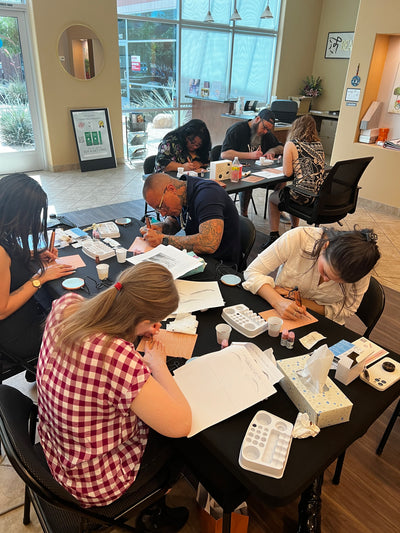
Watching an educator tattoo is useful. Performing the procedure under direct guidance is where knowledge becomes skill. Beginners often need correction in small but critical areas: holding the machine too upright, moving too slowly, failing to stretch the skin consistently, or making repeated passes in the same area.
Those corrections are difficult to receive from an online video. In-person education offers immediate feedback while habits are still forming. It also gives students a better understanding of appointment flow, client comfort, photography, and the professional standards clients notice from the moment they arrive.
At AZPMU, fine line tattoo education is designed for students who want a structured path into this growing specialty. State-approved education, hands-on instruction, live-model experience, professional tools, and business-focused support help students move beyond practice pieces and toward a service they can confidently build into their career.
Build a portfolio that earns trust
Your first portfolio does not need to be large. It needs to be honest, clean, and professionally presented. Start with designs that suit your current skill level rather than taking on dense sleeves, complicated cover-ups, or highly detailed micro realism before you have built consistency.
Choose work that shows line control, thoughtful placement, and clear photography. Capture the design in natural lighting when possible, photograph the full placement as well as close-up details, and keep editing minimal. Clients want to see the tattoo clearly, not a heavily filtered image that hides line quality.
Healed photos are especially valuable because they show how your work performs beyond the day of the appointment. Build policies that encourage clients to return for follow-up images, while respecting their privacy and consent. Over time, healed work becomes one of the strongest indicators of your growth as an artist.
Turning training into a beauty business
Fine line tattooing can fit naturally into a broader beauty business. A permanent makeup artist may offer subtle fine line designs alongside brows, lip blush, or eyeliner. An esthetician or salon owner may add the service to create a more specialized menu. A tattoo artist may use fine line training to improve precision and attract clients seeking minimalist designs.
Your business model depends on your market, operating expenses, local regulations, and experience level. Some artists begin by renting a compliant station within an established studio. Others build toward a private suite or add fine line services to an existing beauty lounge. The best next step is the one that allows you to maintain safety standards, protect your reputation, and grow at a pace your skills can support.
Price with intention. Include consumables, equipment maintenance, rent, insurance, taxes, consultation time, setup, cleanup, and your artistic labor. Underpricing may help fill a schedule temporarily, but it can make it difficult to reinvest in education, quality supplies, and a compliant workspace. Strong pricing is not about charging the most on day one. It is about creating a business that can deliver consistent professional service.
Questions to ask before enrolling
Before choosing a course, ask whether the training includes live models, supervised hands-on practice, sanitation instruction, equipment, and support after class. Find out who teaches the course and whether the educator has real experience serving clients and running a beauty business. Ask what certification you receive and how the school supports students with the paperwork or compliance questions that may apply in their area.
Also consider your learning style. A short course may be appropriate for an experienced tattoo professional adding a new technique, while a true beginner may benefit from more guided practice and direct instructor access. The fastest option is not always the strongest investment if it leaves you uncertain about machine control or client safety.
Fine line tattooing can be a powerful career addition, but the goal is not simply to finish a class. Choose training that helps you leave with professional standards, practiced technique, and a plan for the first client who trusts you with their skin.

Leave a comment