

Ombre Brows Certification for Beginners Starts Here
A soft, shaded brow can look effortless on a client. Creating one safely, consistently, and profitably is another matter. Ombre brows certification for beginners is where aspiring artists learn to turn an interest in permanent makeup into a professional service backed by technique, sanitation standards, and real client-ready experience.
Ombre brows are not simply “makeup that lasts.” They are a cosmetic tattoo procedure that requires careful depth control, color selection, skin assessment, machine handling, and healing guidance. A quality education gives you more than a certificate to frame. It gives you the foundation to build confidence, earn trust, and begin offering a high-demand brow service responsibly.
What Ombre Brows Certification for Beginners Should Teach
A beginner course should start with the principles that protect both the artist and the client. Before working on live skin, students need to understand bloodborne pathogen prevention, workstation setup, cross-contamination prevention, contraindications, consent, and aftercare. These are not side topics. They are part of your professional standard and the reason clients feel comfortable booking with you.
From there, the training should move into brow artistry. Ombre brows use a pixelated, powdered effect that can range from airy and natural to more defined and makeup-inspired. The final result depends on placement, saturation, brow mapping, machine movement, needle choice, skin type, and the client’s desired look. Beginners need repeated practice in each area rather than a rushed overview.
A strong curriculum also covers color theory. Pigment does not heal exactly as it appears in the cup or immediately after a procedure. Skin undertones, previous cosmetic tattooing, sun exposure, skin condition, and pigment formulation can all affect healed color. Learning how to assess these variables early helps prevent avoidable corrections later.
The Difference Between Watching and Training
Free videos can introduce you to the industry, but they cannot evaluate your hand pressure, correct your needle angle, review your mapping, or step in when a client’s skin responds differently than expected. Permanent makeup is hands-on work. Your education needs hands-on correction.
Practice on latex is valuable because it develops machine familiarity and helps you understand pixel patterns before working on a person. Still, latex does not have pores, texture, oil production, sensitivities, or the healing variables found in real skin. Live-model training is where students begin connecting their technical practice to actual service execution.
That transition should be supervised. An experienced instructor can help you recognize when to adjust your speed, avoid overworking an area, modify your approach for mature or oily skin, and communicate clearly with the model throughout the appointment. This kind of guidance can save a beginner from developing habits that are difficult to unlearn.
Look for Training That Supports Your License Path
Certification and licensure are related, but they are not always the same thing. Requirements vary by state, county, and local health department, so a course certificate alone may not authorize you to perform services in every location. Before enrolling, understand what your local board or health authority requires for cosmetic tattooing.
The right school should help you identify the documentation, bloodborne pathogen requirements, practical hours, applications, and other steps connected to your path. For artists who plan to work across state lines or relocate, a credential from a state-approved education provider and a program recognized by professional boards can offer stronger career mobility.
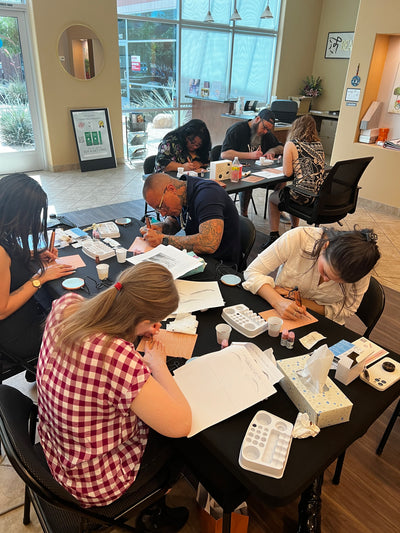
At Arizona Permanent Makeup Training Academy, students can train in a structured environment designed around professional technique, live-model experience, machine-inclusive packages, and support with the paperwork that often slows down new artists. That combination matters when your goal is not just to finish class, but to move toward legal, confident practice.
What You Should Receive in a Beginner Ombre Brow Course
Your investment should match the level of support you need. Lower-cost classes can seem attractive, especially when you are new to the field, but they may leave out equipment, model access, ongoing guidance, or practical training. A more comprehensive program may cost more upfront while reducing the separate expenses and uncertainty that can delay your launch.
Ask what is included before you commit. A professional beginner course should clearly explain whether your tuition covers a PMU machine, needles, pigments, mapping tools, practice materials, sanitation supplies, a manual, certificate, and live models. You should also know how many training days are included and whether there is support after class.
Do not choose based on a certificate design or social media promises. Choose based on whether the program teaches you to perform a complete service from consultation through aftercare. Clients pay for the result, but they also pay for your process, professionalism, and ability to make sound decisions when a brow case is not straightforward.
The Technical Skills That Build Paid-Artist Confidence
Beginner artists often focus first on creating a pretty brow shape. Shape matters, but ombre brow work is more technical than it looks. You need to create symmetry that works with natural facial structure, manage a soft front, build a clean arch and tail, and place pigment in a way that heals evenly.
Machine control is central to that process. You will learn how speed, hand movement, stretch, and needle configuration work together to create the powder effect. Too little saturation can lead to a weak healed result. Too much trauma can affect retention, healing, and the client experience. The goal is controlled implantation, not simply adding more passes.
Skin assessment is equally important. Oily skin may heal softer or retain pigment differently than dry skin. Mature skin may require a lighter hand and a modified design. Clients with old brow tattooing, certain medications, active skin conditions, or unrealistic expectations may not be ideal candidates for a standard appointment. A trained artist knows that declining, postponing, or referring a client can be the most professional decision.
Start Thinking Like a Brow Business Owner
Certification is your starting point, not the finish line. Once you are qualified to practice in your area, you need a plan for turning your skill into a business. That includes setting up a compliant workspace, pricing services appropriately, documenting procedures, scheduling touch-ups, and creating a client experience that encourages referrals.
Ombre brows can be a strong addition to a salon, suite, or existing aesthetics business because the service is specialized and results are highly visual. Before-and-after photos, with proper client consent, can become some of your strongest marketing assets. Yet growth should not come at the cost of quality. It is better to build a portfolio carefully than to rush into discounted appointments before your technique is ready.
Consider your local market, your overhead, and the value of your time when setting prices. A touch-up policy should be clear from the beginning, since healing varies and most clients need a follow-up appointment to refine the result. Strong consultation policies also protect your calendar and set realistic expectations before pigment ever touches the skin.
Questions to Ask Before You Enroll
Ask whether the program is approved or recognized for the career path you want, and confirm what local requirements you will need after graduation. Find out how much hands-on work you will complete, whether you will work on live models, and who supervises that work.
You should also ask about the instructor’s field experience. An educator who has worked directly with clients understands the real-world details that textbooks can miss, from handling nervous clients to managing asymmetry concerns and planning touch-up appointments. Business knowledge is another advantage. Technical talent matters, but new artists also need to know how to operate professionally.
Finally, ask what happens after the class ends. The best beginner training does not make you feel abandoned the moment you receive your certificate. Continued mentorship, refresher opportunities, supply guidance, and an informed answer to a post-class question can make a meaningful difference in your first months as an artist.
Your first ombre brow training should give you a career foundation you can stand behind. Choose education that expects precision, teaches safety without shortcuts, and prepares you to serve your first clients with the skill and professionalism they deserve.

Leave a comment