

Stretch Mark Camouflage Examples That Set Expectations
A client may arrive with pale, silvery stretch marks on her hips, or with darker marks across the abdomen that stand out against her natural skin tone. The most useful stretch mark camouflage examples do not promise to erase either one. They show what a skilled paramedical tattoo can do: reduce contrast, soften visual interruption, and help the area read more evenly from a normal viewing distance.
For artists, this distinction protects your reputation. For clients, it protects their confidence and investment. Stretch mark camouflage is a specialized skin-tone tattoo service, not a cover-up shortcut. Results depend on the mark’s maturity, the surrounding skin, pigment selection, technique, healing response, and realistic expectations.
What Stretch Mark Camouflage Actually Changes
Stretch marks form when the skin stretches faster than its collagen and elastin structure can adapt. Pregnancy, weight changes, growth spurts, hormone shifts, and muscle growth can all contribute. A camouflage tattoo does not rebuild collagen or flatten texture. It places custom-blended pigment into suitable, healed skin so the color difference between the mark and nearby skin is less noticeable.
That means a successful result is often subtle. The goal is not to create a perfectly flat, airbrushed surface. The goal is for the treated area to look less interrupted when the client stands, moves, wears swimwear, or sees herself in the mirror.
This service is especially valuable for artists building a restorative or paramedical tattoo menu. It requires a more thoughtful approach than selecting a standard cosmetic tattoo color. Skin has undertones, marks can reflect light differently than healthy tissue, and the final healed color may shift from what is visible immediately after the appointment.
Stretch Mark Camouflage Examples by Skin Condition
The condition and age of the stretch marks matter more than the body area alone. These examples help clients and developing artists understand what may be treatable and what should be assessed further.
Mature white or silver stretch marks
These are among the most common candidates for camouflage. Older striae often appear white, silver, or lighter than the surrounding skin. On a medium or deeper skin tone, the contrast can be pronounced. A custom pigment blend can bring the marks visually closer to the client’s surrounding tone.
For example, a client with mature pale marks along the outer thighs may see a softer transition after treatment. Close up, the texture may still be visible. From several feet away, the area can appear more balanced because the bright lines no longer catch the eye first.
Stretch marks on the abdomen after pregnancy or weight change
The abdomen is a frequent consultation area, but it requires careful screening. If the skin is still changing due to postpartum recovery, active weight loss, or planned surgery, waiting may produce a more stable outcome. Camouflage is best considered after the marks have matured and the skin condition is consistent.
A strong before-and-after example on the abdomen is not one where every line disappears. It is one where a network of pale marks becomes less visible against the client’s natural skin tone while the artist preserves a natural overall appearance.
Hip, thigh, and buttock stretch marks
These areas can respond well when marks are mature and the skin is healthy. They also show why color theory cannot be skipped. A pigment that appears correct in a pigment cup may heal too warm, too cool, too light, or too saturated if the artist fails to account for the client’s undertone and the unique appearance of scarred tissue.
The best stretch mark camouflage examples in these areas usually show gradual improvement after healing, not an immediate dramatic transformation. A second session is often part of the plan because the artist needs to evaluate retention and adjust the blend once the skin has healed.
Stretch marks on deeper skin tones
Deeper skin tones deserve precise evaluation, not generic pigment formulas. The surrounding skin may contain multiple undertones, and an overly light or opaque pigment can create an obvious patch rather than a camouflage effect. Artists must understand how warmth, depth, and melanin influence the healed result.
A thoughtful treatment may use a muted, layered blend rather than trying to match the skin with a single flat color. This is advanced work. It rewards artists who train with varied models, understand healed results, and know when a client needs a conservative approach.
What Good Results Look Like in Person
Marketing photos can create the wrong standard when they use fresh, red, swollen skin as proof of success. Immediately after treatment, pigment can look brighter, warmer, or more opaque than it will after healing. The area may also look temporarily smooth because of hydration, lighting, or the angle of the photograph.
A credible result is assessed after the skin has healed. The marks should blend more naturally with the surrounding area, without creating a sharp block of color. The client should understand that the marks may remain visible up close, especially where texture is deep.
Lighting matters as well. A treated area can look nearly invisible in soft indoor light yet show some texture in direct sun. That is not automatically a failed procedure. An ethical provider explains the difference between color camouflage and texture correction before booking.
Why Consultation Determines the Outcome
A professional consultation should include more than choosing a color. The artist needs to ask when the stretch marks formed, whether the client is currently pregnant or nursing, whether the area has had recent surgery, and whether there is active inflammation, infection, or a history of challenging scar healing.
The skin should be fully healed and stable. Fresh red, purple, or actively changing stretch marks are not the same as mature, pale striae. A client with eczema, dermatitis, sunburn, open skin, or unexplained irritation in the treatment area should postpone and seek appropriate medical guidance when needed.
Patch testing and test spots can be useful, particularly when the client has a history of sensitivity or when the artist is working with a complex skin tone. This cautious step may feel less dramatic than booking a full-area procedure immediately, but it creates better information for both artist and client.
The Technical Skill Behind Natural Camouflage
Camouflage work is a business opportunity, but it is never a service to add casually. Artists need training in sanitation, machine control, skin assessment, color theory, pigment behavior, corrective planning, and client documentation. They also need to recognize the boundary between cosmetic tattooing and medical care.
Depth is critical. Working too aggressively can traumatize the skin, affect healing, and compromise pigment retention. Working too superficially may produce poor retention. Because stretch marks are irregular and often textured, consistent hand pressure and needle movement are essential.
Artists should also prepare clients for a staged process. A first session establishes an initial camouflage effect. After healing, the artist assesses how the skin retained the pigment and whether the tone needs adjustment. Depending on the size of the area and the client’s skin response, more than one session may be appropriate.
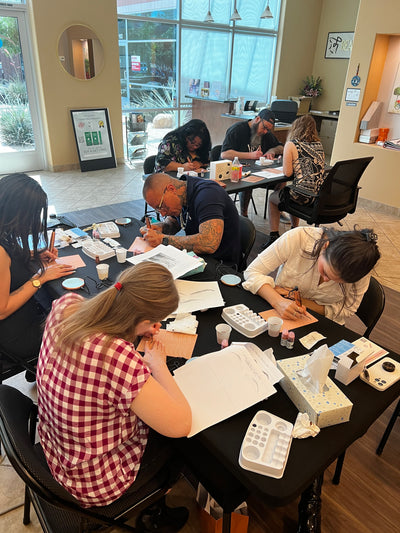
At Arizona Permanent Makeup Training Academy, paramedical education is designed to connect technical training with the real operational skills artists need: live-model experience, professional tools, sanitation standards, client communication, and the confidence to build a specialized service menu responsibly.
Setting Expectations Without Selling Fear
Clients do not need exaggerated promises. They need clear, confident information. Explain that camouflage can reduce the visibility of mature stretch marks, but it will not remove texture or guarantee that the treated area will look identical in every light. Explain that healed color, not fresh color, is the result that matters.
This honest approach is also good business. Clients who understand the process are more likely to follow aftercare, return for evaluation, and refer others because they feel respected rather than oversold. Before-and-after photos should be consistent in lighting, distance, and timing whenever possible. Show healed work, not only day-of results.
For artists pursuing this specialty, the standard is simple: learn to see skin accurately before trying to change how it looks. That skill turns stretch mark camouflage from a trendy add-on into a restorative service clients can trust.

Leave a comment