

Permanent Makeup Training for a Real Career
A beautiful set of brows is the finished result. The career behind it depends on far more than a steady hand. Permanent makeup training is where aspiring artists learn to work safely, understand skin, create intentional healed results, communicate with clients, and turn a specialized service into a business they can build on.
For someone entering the beauty industry, permanent cosmetics can offer a clear path toward a high-value skill set. For licensed professionals, it can add services that clients actively seek, including nano brows, ombre brows, lip blush, eyeliner, scalp micropigmentation, and restorative tattooing. The right program does not simply teach a technique. It prepares you to make professional decisions when every face, skin type, and healing process is different.
What Permanent Makeup Training Should Prepare You For
Permanent makeup is cosmetic tattooing. That means training must cover artistry and technical execution, but it also has to address sanitation, contraindications, pigment selection, skin response, aftercare, informed consent, and local licensing requirements. A certificate without those foundations may look appealing at first, but it will not give a new artist the confidence to work responsibly.
A strong education begins with the reason behind each step. Students should learn why brow mapping changes from one client to the next, why pigment can heal differently in oily or mature skin, and why a machine setting that works for one procedure may be too aggressive for another. Technique matters, but judgment is what protects the client and your reputation.
Training should also teach the business side of the treatment room. Artists need to know how to price services, photograph healed work, set clear expectations, manage touch-up appointments, document procedures, and build a professional consultation process. These details are not extra. They are part of delivering a service clients trust enough to book and refer.
Hands-On Practice Changes Everything
Watching a demonstration is useful. Performing a procedure with an experienced educator nearby is where learning becomes real. Permanent makeup requires muscle memory, visual assessment, pressure control, proper stretch, depth awareness, and the ability to adjust when skin does not behave exactly as expected.
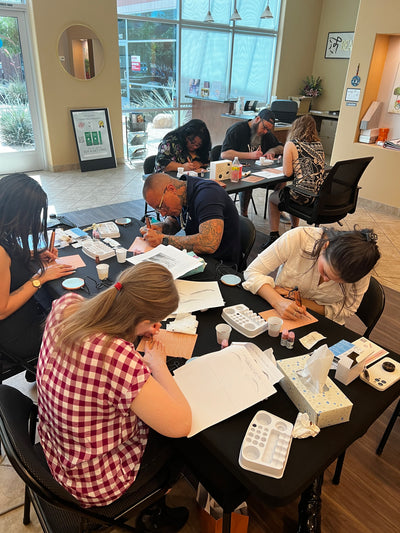
That is why hands-on instruction matters. Practice on training materials can help students understand needle movement and pattern consistency, but live-model experience introduces the realities of client care. Students learn to conduct a consultation, map a face, maintain a clean workstation, explain the procedure, manage their time, and work with the variables that make every appointment unique.
Live models should never be treated as a shortcut to a portfolio. They are an opportunity to learn under supervision. The goal is not to rush toward a finished photo. The goal is to develop safe habits and a repeatable process that holds up when you begin serving your own clients.
Equipment Is Part of the Education
New artists often underestimate how much their equipment affects their learning curve. A quality machine, appropriate needle configurations, pigments, measuring tools, barrier products, and sanitation supplies all influence the procedure. Training packages that include professional equipment can help students begin with tools selected for the techniques they are learning instead of making expensive guesses after class.
Still, equipment does not replace education. A premium machine cannot correct poor depth, weak mapping, or an incomplete understanding of skin. The best training explains what each tool does, when to use it, and how to maintain it, while giving students enough practice to develop control.
Choose Training Based on Your Career Goal
There is no single permanent makeup path that fits every student. Your best course depends on the services you want to offer, the professional background you bring to the table, and the regulations where you plan to work.
A beginner who wants to build a brow-focused business may start with foundational training in machine brows, nano brows, or powder and ombre techniques. An esthetician with an established clientele may add lip blush or eyeliner to increase the value of each client relationship. A tattoo artist may be drawn to scalp micropigmentation, fine-line tattooing, or paramedical work because those services use related skills while serving different client needs.
Advanced education can become especially valuable after you have built basic confidence. Color correction, saline removal, scar camouflage, stretch-mark camouflage, and areola restoration require a more developed understanding of skin, pigment behavior, and consultation. These services can be deeply meaningful for clients, but they are not areas to approach with minimal preparation.
Before enrolling, ask direct questions about what the program actually includes. Find out whether the course covers theory, demonstrations, supervised practice, live models, equipment, infection-control procedures, ongoing support, and licensing or board paperwork guidance. Ask how much individual feedback you will receive. A small detail such as instructor access can make a major difference when you are learning a precision service.
Credentials Matter, but So Does Compliance
A certification shows that you completed a course. It does not automatically mean you can legally practice in every city or state. Requirements can vary by location, service type, and governing agency. Some areas regulate permanent cosmetics through body art rules, while others may have separate requirements for esthetics, health department permits, bloodborne pathogen training, or facility licensing.
This is where a state-approved school and direct paperwork support can offer practical value. Instead of piecing together requirements from social media comments, students can receive guidance on the steps required to move from training to professional practice. Arizona Permanent Makeup Training Academy is built around that career-focused model, pairing structured education with live-model instruction, professional tools, and support for the administrative side of entering the industry.
Portable credentials are also worth considering if you expect to relocate, travel, rent a suite, or build a multi-state client base. However, portability does not erase local rules. A serious artist verifies the requirements for the jurisdiction where they will work before accepting clients.
The Skills Clients Actually Notice
Clients may not know the name of your needle configuration, but they notice whether they felt informed, comfortable, and respected. They notice whether the brow shape fits their features, whether the lip color feels wearable, whether the artist explained healing honestly, and whether the studio feels clean and professional.
The most successful technicians pair visible artistry with a reliable client experience. They do not promise identical healed results on every skin type. They explain that retention varies, that touch-ups may be needed, and that lifestyle, skincare, medication, and previous tattoo work can affect outcomes. This honesty creates stronger client relationships than overpromising ever will.
It also protects your schedule. A thorough consultation can identify clients who need a different treatment, more time, removal or correction work first, or medical clearance before proceeding. Learning when not to perform a service is a professional skill, not a lost sale.
Building Income After Training
Permanent makeup can create meaningful earning potential, but income does not appear the moment class ends. New artists need time to practice, build a portfolio, refine consultations, market ethically, and establish a consistent booking process. The speed of that growth depends on your location, service menu, pricing, client experience, and willingness to keep learning.
Start by choosing a focused offer rather than trying to provide every procedure immediately. A strong brow specialty, for example, can give you time to create consistent work and clear messaging. As your skill and demand grow, you can add complementary services such as lip blush, eyeliner, brow lamination, microneedling, saline removal, or scalp micropigmentation.
Your photos should show clean work in consistent lighting, but healed results tell the fuller story. Request client feedback, document touch-ups, and protect your reputation through careful records and realistic communication. A lasting business is built on repeat trust, not a single viral before-and-after.
Train for the Artist You Want to Become
The right program should make the next step feel clear: learn the technique, practice with purpose, complete your requirements, and begin building a professional service business. Look for education that respects both the creative opportunity and the responsibility that comes with placing pigment in skin.
Your first class is not the finish line. It is the point where your standards begin. Choose permanent makeup training that gives you the skill, support, and professional mindset to create work you are proud to put your name on.

Leave a comment